The ocean is our shared home. A clean and green ocean is the constant goal we strive for.
Shipping is an age-old industry, dating back to when humans first built boats and paddles. It has undeniably driven tremendous development across the globe.
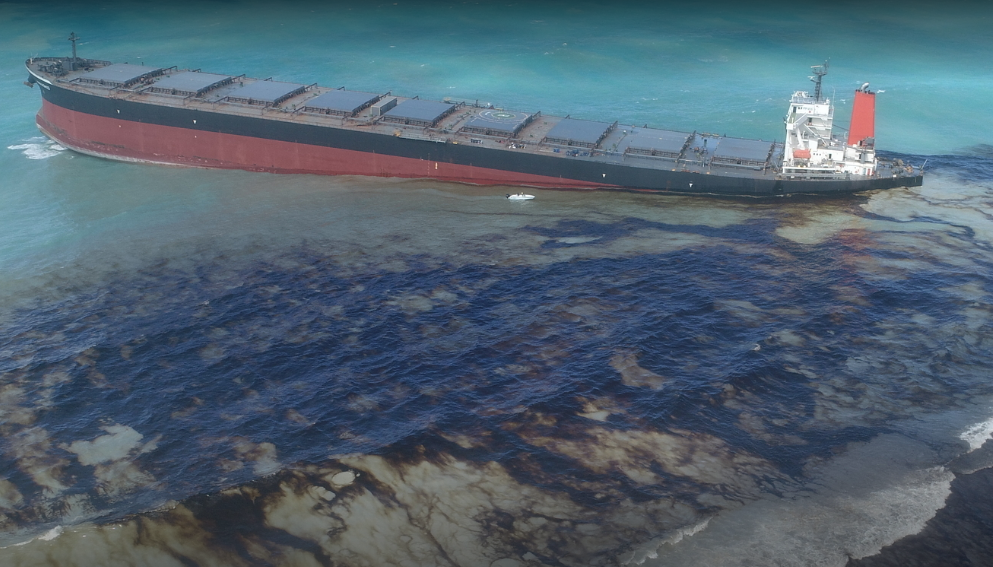
Although MARPOL has laid out detailed requirements for shipboard anti-pollution measures — including control of oily water, waste cargo, engine exhaust emissions, and more — together with strict regulations and inspections by maritime authorities, marine pollution incidents still occur due to intentional or unintentional acts by vessels and crew.
These incidents cause severe harm to our clean ocean and countless marine organisms, disrupting the ecological balance.
As a professional maritime service provider, we stand side by side with shipowners, sharing the common goal: safe ship operations at sea and a harmonious coexistence between marine life, the ocean and land — what we define as sustainable development.
With this mission, we are committed to fulfilling all entrusted tasks from shipowners, upholding our principle of mutual support and common development.
Therefore, we carry out 15PPM bilge alarm calibration services as entrusted, helping to eliminate ocean pollution at the source through proper use and maintenance of existing equipment and technology.
During such 15 PPM calibration, which we had conducted with fully following the stand procedure & regulation stated by Marpol and other relevant standard:
Calibration Procedure for 15PPM Bilge Alarm Unit (Performed by a Qualified Organization):
1. Qualification Prerequisites (Statutory Requirements)
-
The organization must be the original equipment manufacturer (OEM) or an officially authorized service agency with a valid authorization certificate.
-
Possess CNAS accreditation or classification society recognition (CCS, DNV, LR, BV, etc.).
-
Calibration technicians shall be trained and certified by the OEM.
-
Use certified, traceable standard oil solutions (OPPM, 5PPM, 10PPM, 15PPM, 20PPM) with uncertainty s ±2%.
-
Calibration records and certificates shall be traceable and verifiable.
2. Pre-Calibration Preparation
2.1 Environmental & Equipment Conditions
-
Ambient temperature: 0-40°C, relative humidity less than or equal to 85%, free from vibration and electromagnetic interference.
-
Power on and warm up the unit for at least 30 minutes to stabilize the optical sensor.
-
Ensure the sampling line is free of air bubbles, blockage and leakage, with stable flow rate.
-
Clean the measuring chamber and optical lens to ensure no oil contamination or fouling.
-
Verify the 15PPM set point is sealed and non-adjustable.
2.2 Standard Solutions & Tools
-
0PPM: Deionized or distilled water
-
15PPM: Certified standard oil solution compliant with MEPC.107(49)
-
Auxiliary points: 5PPM, 10PPM, 20PPM standard solutions
-
Tools: standard solution injection device, flow meter, stopwatch, calibration record form, lead sealing tools
3. Standard Calibration Procedure
3.1 Zero Calibration (0PPM)
-
Supply clean fresh water and wait for stable reading (≥30 seconds).
-
Perform Zero Calibration in the calibration menu.
-
Acceptance criteria: displayed value ≤ 0.5PPM, stable zero drift.
3.2 Span Calibration at 15PPM (Critical Step)
-
Supply 15PPM certified standard oil solution at the same flow rate as sampling.
-
Stabilize for at least 2 minutes (per manufacturer's instruction).
-
Perform Span Calibration/15PPM Calibration.
-
Acceptance criteria: (1) Displayed value: 15 ± 1.5PPM (error < ±10%) (2) Audible and visual alarm must activate at 15PPM (3) Automatic overboard discharge valve closes within ≤20 seconds (fail-safe)
3.3 Linearity & Repeatability Verification
-
Supply 5PPM, 10PPM, 20PPM standard solutions sequentially and record readings.
-
Acceptance criteria: (1) 0-15PPM: error < ±1.5PPM (2)15-30PPM: error< ±10% (3)Repeatability of 3 tests < ±0.5PPM
3.4 Response Time Test (Mandatory)
-
Switch from OPPM to ≥15PPM standard solution and measure with stopwatch.
-
Acceptance criteria: (1) Display update response: ≤5 seconds (2)Total alarm +valve shut-off time: ≤20 seconds
3.5 Functional & Fault Simulation Test
-
Alarm interlock: 15PPM →alarm→automatic shut-off.
-
Fault simulation: disconnect sensor/sampling→fault alarm activates.
-
Data logging: alarm events automatically stored for ≥18 months.
-
Power failure test: calibration values and records retained after power reset.
3.6 Post-Calibration Sealing & Recording
-
Apply lead seal to the 15PPM set point and calibration access, record seal number.
-
Complete original calibration records including model, serial number, standard solution data, measured values, errors, conclusion, operator and date.
4. Calibration Certificate Requirements
Mandatory Contents
-
Title: Calibration Certificate for 15PPM Bilge Water Alarm Unit
-
Equipment details: model, serial number, ship name, IMO number
-
Calibration standards: MEPC.107(49), MEPC.285(70), OEM manual
-
Standard solution: name, concentration, certificate number, traceability
-
Calibration data: 0, 5, 10, 15, 20PPM measured values, errors, response time
-
Conclusion: Qualified / Unqualified, validity period (≤5 years)
-
Signatures & stamp: Calibrator, Reviewer, Authorized Signatory, official seal
Certificate Management
-
Issued in duplicate: one original for ship's record, one archived by the organization for ≥5 years.
-
No alteration allowed; copies must be stamped to be valid.
5. Calibration Interval & Compliance Key Points
-
Statutory maximum interval: ≤5 years
-
Actual interval: follow OEM instruction (normally 1 or 2 years), whichever is shorter.
-
Recalibration required after repair, sensor replacement or major modification.
-
PSC / Surveyor checks: valid certificate, intact lead seal, complete records, proper alarm and shut-off function.
6. Common Non-Conformities
-
Non-traceable standard solutions
-
Excessive response time
-
Out-of-tolerance at 15PPM
-
Failure of automatic overboard shut-off
-
Incomplete or non-compliant calibration certificate
When we watch whales leap out of the water, spouting arcs of spray, and chase each other joyfully;
when lovely dolphins, clumsy walruses and flying seabirds appear along the way — this blue ocean is their only home.
Think of the polluted waters and helpless marine creatures.They have nowhere else to go.
The Earth and the ocean belong to all of us.
Preventing marine pollution and protecting our shared environment is not just a duty, but a necessary choice for long-term survival together.



 +8615005328513 (wechat ) +8613606393913 (Whatsapp)

 No. 8888, Huangshan Road, Huangdao District, Qingdao City, Shandong Province, China.